
If you hold a Pakistani passport and want to visit Canada in 2026, whether for tourism, to see family, or for short business activities, you will need a Canadian visitor visa, officially called a Temporary Resident Visa (TRV), before you travel. Pakistan is a visa-required country, so the Electronic Travel Authorization (eTA) system does not apply to Pakistani citizens, regardless of how you travel.
This guide covers everything a Pakistani applicant needs to know: who qualifies, what the visa allows, the documents you should prepare, the current fees in Canadian dollars, how to apply through VFS Global in Pakistan, and the latest processing times. Every fee, rule and procedure below was checked against official Immigration, Refugees and Citizenship Canada (IRCC) sources on 10 October 2026.
If you are comparing destinations, you may also find our guides to the USA visit visa from Pakistan and the UK visit visa from Pakistan useful.
Key Facts at a Glance
| Detail | Summary |
|---|---|
| Visa type | Visitor visa (Temporary Resident Visa, TRV) |
| Who needs it | Pakistani passport holders (visa-required country; eTA not available) |
| Maximum stay | 6 months per visit (set by the border officer) |
| Entries | Single or multiple entry (IRCC decides; generally multiple entry up to 10 years) |
| Government fees | CAD $100 visa fee + CAD $85 biometrics = CAD $185 for a first-time applicant |
| Current processing time | 71 days for applications from Pakistan (IRCC tool, updated 7 October 2026) |
| How to apply | Online through an IRCC account, then biometrics at a VFS Global centre in Pakistan |
Do Pakistani Citizens Need a Visa to Visit Canada?
Yes. Pakistan is on Canada’s list of visa-required countries, which means you must obtain a visitor visa before travelling. This was confirmed on IRCC’s official entry-document tool: for a Pakistani passport holder, the result is “You need: Visitor visa”, at a cost of CAN $100, valid for single or multiple entries up to a maximum of 10 years, with stays of up to 6 months per visit.
The eTA is sometimes confused with a visa. It is only available to citizens of visa-exempt countries and a few other specific categories. Because Pakistanis require a visa, the eTA does not apply to you.
Eligibility Requirements
IRCC sets out the following requirements for a visitor visa. You must:
- Hold a valid travel document, such as a passport.
- Be in good health.
- Have no criminal or immigration-related convictions.
- Convince an immigration officer that you have ties, such as a job, home, financial assets or family, that will take you back to your home country.
- Convince an immigration officer that you will leave Canada at the end of your visit.
- Have enough money for your stay. The amount depends on how long you will stay and whether you will stay in a hotel or with friends or relatives.
You may also need a medical exam, and a letter of invitation from someone who lives in Canada can support your application. Certain grounds, including criminal activity, security concerns and health reasons, can make a person inadmissible.
A point worth understanding is “dual intent”. Canadian law expressly recognizes that a person can intend to visit temporarily while also hoping to immigrate one day; having applied for permanent residence does not by itself disqualify you from a visitor visa. However, the officer must still be satisfied that you will leave Canada at the end of your authorized stay. Officers weigh your ties to Pakistan, your means of support, the purpose of the trip, the credibility of your documents and your past compliance with immigration rules.
What You Can and Cannot Do on a Visitor Visa
You can:
- Travel for tourism and holidays
- Visit family and friends in Canada
- Conduct business activities tied to your job back home, such as meeting clients or attending conferences, without a work permit
- Take short courses of 6 months or less
You cannot:
- Work in Canada without a work permit. In particular, secretarial, managerial, technical or production work, or any stay involving work beyond 6 months, requires a proper work permit.
- Study for longer than 6 months without a study permit.
- Stay beyond the date the border officer authorizes (usually up to 6 months per visit).
Documents Required for a Canada Visitor Visa From Pakistan
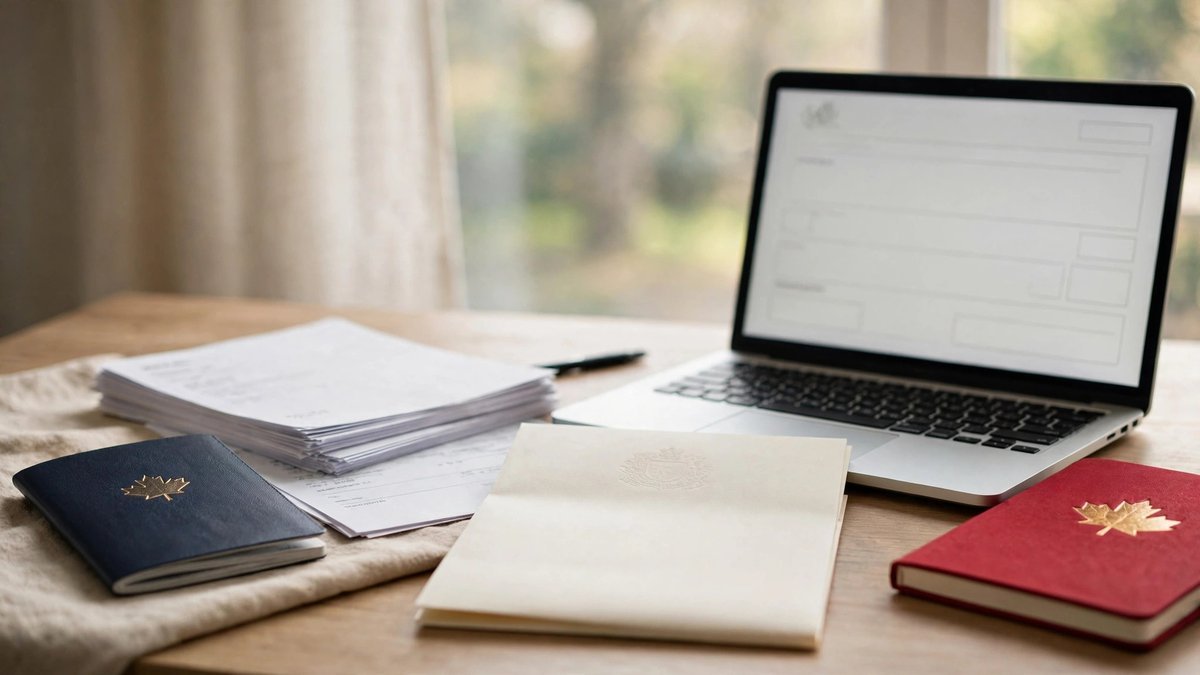
When you apply online, the IRCC portal generates a personalized document checklist, and you must provide everything on it. The following are the core and commonly requested items:
| Document | Details |
|---|---|
| Valid passport | Must be valid for at least 6 months from your planned travel date, with at least one blank page and validity extending at least one month beyond your planned departure from Canada |
| Passport copies (Pakistan-specific) | Applicants submitting through VACs in Pakistan must include copies of the biographic page and all non-blank pages of current and previous passports |
| Travel history | Previous passports and visas used in the last 10 years, entry and exit stamps, expired or valid visas, study or work permits |
| Itinerary | Flight details, proof of accommodation, event registrations where relevant |
| Bank statements | At least 6 months of account details showing balances; the statements must show the bank’s name and contact details and your name and address |
| Employer letter | On official letterhead, dated no earlier than 3 months before applying; confirms your employment, full name, date of birth, start date, job description, current salary, and a manager’s contact details and signature |
| Invitation letter | From a Canadian host or business where applicable |
One discrepancy is worth noting honestly: the online checklist asks for 6 months of bank statements, while IRCC’s Pakistan visa-office instructions mention 3 months of bank records for most applicants. Because the portal generates your binding checklist, follow what your own checklist asks for.
The CAN+ provision. Pakistanis who have travelled to Canada in the last 10 years, or who currently hold a valid US nonimmigrant visa, do not need to provide proof of financial support, provided they can prove it with entry stamps or the valid US visa. Everyone else must show bank records plus supporting documents such as an employer letter, pay slips or business registration. If someone else is funding your trip, include their signed letter, a copy of their passport or photo ID, and a bank certificate showing sufficient funds, with documents dated within 3 months of submission.
False statements or fraudulent documents lead to immediate refusal, so every document must be genuine and consistent.
Financial Requirements: Is There a Minimum Bank Balance?
IRCC publishes no official minimum funds figure for visitor visas. Officers instead assess whether you have “enough money for your stay”, with the amount depending on the length of your stay and whether you will stay in a hotel or with friends or relatives.
In practice, officers look at whether your funds are consistent with your income, whether there are sudden unexplained deposits, whether the trip’s cost is proportionate to what you earn, and who is funding the trip. As with other countries, keep your bank activity clean and explainable in the months before applying, and never borrow money temporarily to inflate your balance.
Canada Visitor Visa Fees 2026
The fees below are from IRCC’s official fee list, checked on 10 October 2026. Fees are paid online by card at the end of the application, and they are non-refundable even if your application is refused.
| Fee | Amount (CAD) |
|---|---|
| Visitor visa, per person (single or multiple entry; IRCC decides which to issue) | $100 |
| Visitor visa, family of 5 or more applying together at the same time and place | $500 maximum |
| Biometrics, per person | $85 |
| Biometrics, family of 2 or more applying together | $170 maximum |
| Extend your stay as a visitor, per person | $100 |
| Restore your status as a visitor | $246.25 |
A first-time individual applicant therefore pays CAD $185 in total ($100 visa fee + $85 biometrics). The card used for payment does not need to be in the applicant’s name. Note that VFS Global charges a separate passport-transmission service fee at the visa application centre, which is not part of the IRCC fee list; check the current amount when you book.
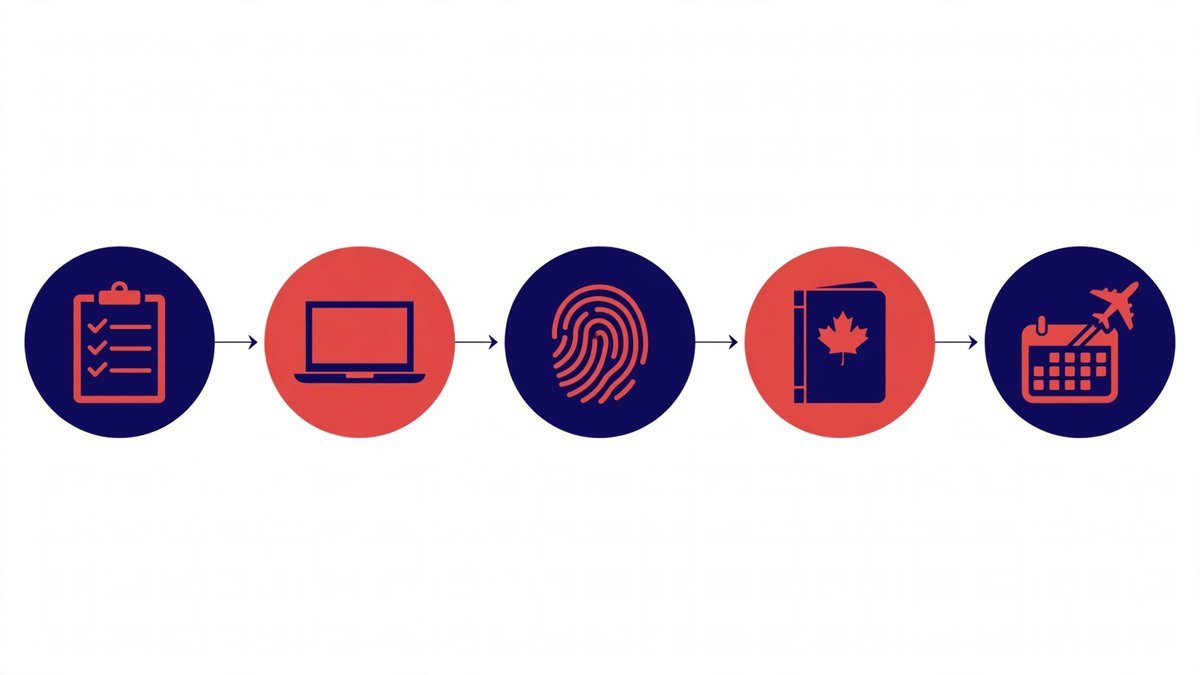
How to Apply for a Canada Visitor Visa From Pakistan: Step by Step
Step 1: Confirm you need a visitor visa
Use IRCC’s official “check if you need a visa or eTA” tool. As a Pakistani passport holder, the answer will be a visitor visa.
Step 2: Gather your documents
Work through the personalized document checklist the IRCC portal generates for you, using the documents section above as a guide.
Step 3: Create an IRCC account and apply online
Submit your application through the IRCC online portal and upload your documents. Paper applications are accepted only in limited situations, such as where the applicant cannot apply online because of a disability.
Step 4: Pay the fees
Pay the visa fee and the biometrics fee online by card at the end of the application. First-time applicants should pay the biometrics fee together with the application to avoid delays.
Step 5: Give your biometrics

After applying, you will receive a Biometrics Instruction Letter. Book an appointment at a VFS Global visa application centre in Pakistan as soon as possible. Biometrics means 10 fingerprints and a photograph; most applicants aged 14 to 79 must provide them, and they remain valid for 10 years.
Step 6: Wait for the decision
Track your application in your IRCC account. If approved, IRCC will issue a passport request.
Step 7: Submit your passport
Take your passport to the visa application centre when requested so the visa counterfoil can be placed in it, then collect it according to the centre’s instructions.
VFS Global Visa Application Centres in Pakistan
Canada’s visa application centres in Pakistan are operated by VFS Global and are located in Islamabad, Lahore and Karachi. Because addresses, hours and services can change, confirm the current details on the official VFS Global website for Canada in Pakistan rather than relying on addresses printed on third-party websites.
Processing Time: How Long Does It Take?
According to IRCC’s official processing-times tool, checked on 10 October 2026, a visitor visa applied for from Pakistan currently takes 71 days. The tool is updated weekly (this figure was last updated on 7 October 2026) and the published times are estimates, not guarantees.
Processing can take longer if your application is incomplete, if IRCC needs further evidence, or during periods of high demand. Apply well in advance of any planned travel, and do not treat the visa as granted until you have the decision.
Common Reasons Canada Visitor Visas Are Refused
IRCC does not publish an official list of common refusal reasons. The patterns below come from immigration advisers reporting on actual refusal letters, so treat them as observed patterns rather than an official ranking:
- Purpose of visit. The reason for travel is vague, not credible, or inconsistent with the itinerary and documents.
- Personal assets and financial status. Insufficient funds, sudden large deposits, savings that do not match declared income, or a trip cost far beyond what the applicant earns.
- Family ties. Weak ties to Pakistan, or strong ties in Canada that suggest the applicant may not leave.
- Travel history. Limited or negative travel history carries increasing weight in 2026 assessments.
- Employment situation. Unstable employment or weak prospects in the home country; self-employed applicants face closer scrutiny of tax records and business registration.
- Length of stay. Long requested stays need strong funding justification.
- Host’s financial situation. Financial support from a Canadian host that is poorly documented.
- Documents that do not appear genuine. Any doubt about authenticity risks refusal for misrepresentation.
- History of overstaying in Canada or elsewhere, or illegal status in the country of residence.
In 2026, advisers report officers increasingly applying a combined “low credibility of temporary intent” assessment, where weak ties, financial inconsistency and a vague purpose together sink an application. If refused, the refusal letter explains the reasons, and you may apply again once you can address them with stronger evidence. Fees are not refunded.
Visa Validity, Extensions and the Super Visa
The visa officer decides whether to issue a single-entry or multiple-entry visa; in practice, multiple-entry visas valid for up to 10 years (or until your passport or biometrics expire, whichever comes first) are common. Each visit is normally limited to up to 6 months, with the exact leave-by date set by the border officer when you enter, either as a stamp in your passport or on a visitor record.
If you are already in Canada and wish to stay longer, you can apply for a visitor record to extend your stay. Apply at least 30 days before your current status expires; the fee is CAD $100 per person. While a timely application is being processed, you may remain in Canada under the same conditions. Note that a visitor record is not a visa and does not allow re-entry to Canada.
The Super Visa is a separate option for parents and grandparents of Canadian citizens and permanent residents. It allows stays of up to 5 years per entry, with multiple entries over up to 10 years. Unlike the regular visitor visa, it requires private medical insurance of at least CAD $100,000 for at least one year, an immigration medical exam, and a host who meets a minimum income threshold and signs a letter of financial support. Because the income rules were reported to have changed in 2026, check the current official IRCC Super Visa page for the latest thresholds before relying on older figures.
Practical Tips for Pakistani Applicants
- Apply early. With current processing around 71 days, apply at least 3 to 4 months before any planned travel.
- Follow your personalized checklist exactly. It is generated for your specific situation and overrides general guidance.
- Keep finances consistent. Stable, explainable bank activity over several months matters more than a single large balance.
- Show strong ties to Pakistan. Employment, family, property and ongoing commitments are your best evidence of return.
- Be consistent. Everything in the form should match your documents; contradictions invite refusal.
- Keep copies of everything you submit, including the application form and fee receipts.
- Do not book non-refundable travel before the visa is granted.
Frequently Asked Questions
How much is the Canada visitor visa fee from Pakistan in 2026?
The IRCC visa fee is CAD $100 per person, plus CAD $85 for biometrics, so a first-time individual applicant pays CAD $185 in total. A family of 5 or more applying together pays a maximum of CAD $500 in visa fees.
How long does a Canada visitor visa take to process in Pakistan?
IRCC’s official tool showed 71 days on 10 October 2026 (updated weekly). This is an estimate, not a guarantee, so apply at least 3 to 4 months before travelling.
Where do I give biometrics in Pakistan?
At a VFS Global visa application centre in Islamabad, Lahore or Karachi, after you receive your Biometrics Instruction Letter. Book as soon as possible to avoid delays.
Can I work in Canada on a visitor visa?
No. You may conduct business activities tied to your job back home without a work permit, but secretarial, managerial, technical or production work requires a proper work permit.
Is there an interview for the Canada visitor visa?
There is no routine interview. The in-person step is the biometrics appointment at the visa application centre. IRCC may contact you if it needs further information or documents.
Do I need to show bank statements if I have a valid US visa?
Under IRCC’s CAN+ provision, applicants who have travelled to Canada in the last 10 years or hold a valid US nonimmigrant visa do not need to provide proof of financial support, as long as they can prove it.
What happens if my Canada visa application is refused?
Fees are not refunded. The refusal letter sets out the reasons, and you can apply again once you are able to address them with stronger evidence.
Can I extend my stay once I am in Canada?
Yes, by applying for a visitor record at least 30 days before your status expires (fee CAD $100). A visitor record lets you stay longer but does not allow re-entry to Canada.
Official Sources
All rules, fees and procedures in this article were checked against the following official Canadian government pages on 10 October 2026:
- Check if you need a visa or eTA to travel to Canada
- Eligibility to apply for a visitor visa
- Apply for a visitor visa
- About the visitor visa: validity and stay
- Check application processing times
- IRCC fee list for temporary residence
- Pakistan visa office instructions (IMM 5853E)
- Extend your stay in Canada: eligibility
- Guide 5256: Applying for a visitor visa
Disclaimer
TourPointGo is an independent information website and is not affiliated with the Government of Canada, IRCC, VFS Global or any embassy. Immigration rules, fees and processing times change over time; always confirm current requirements on the official Canada.ca pages linked above before applying. This article provides general information only and is not legal or immigration advice.





6 thoughts on “Canada Visitor Visa From Pakistan 2026: Requirements, Fees and How to Apply”