
If you hold a Pakistani passport and want to visit Europe in 2026, whether for tourism, to see family, or for short business travel, you will in most cases need a Schengen visa before you travel. Pakistan is not on the EU’s visa-exempt list, so there is no visa-on-arrival and no electronic alternative for Pakistani citizens.
This guide covers everything a Pakistani applicant needs to know: what the Schengen visa is and which countries it covers, which country you must apply to, the documents and the mandatory travel insurance, the current fees, where Pakistanis actually lodge their applications for the main destination countries, how long processing takes, and how the EU’s new Entry/Exit System affects you at the border. Every rule, fee and procedure below was checked against official sources on 11 October 2026.
If you are comparing destinations beyond Europe, you may also find our guides to the USA visit visa from Pakistan, the UK visit visa from Pakistan and the Canada visitor visa from Pakistan useful.
Key Facts at a Glance
| Detail | Summary |
|---|---|
| Visa type | Schengen short-stay visa (Type C) |
| Coverage | 29 Schengen states; up to 90 days in any 180-day period |
| Who needs it | Pakistani passport holders (Pakistan is not visa-exempt) |
| Visa fee | EUR 90 (age 12+), EUR 45 (ages 6-11), free (under 6); non-refundable |
| Travel insurance | Mandatory, minimum EUR 30,000 |
| Processing | Normally 15 calendar days; up to 45 in individual cases |
| Apply | At the mission or application centre of your main destination, in Pakistan |
| Border system | EU Entry/Exit System (EES) fully operational since 10 April 2026 |
What Is the Schengen Visa?
The Schengen visa (Type C) is a short-stay visa valid for the entire Schengen area: 29 European countries operating common visa rules. They are the 25 EU members Austria, Belgium, Bulgaria, Croatia, Czechia, Denmark, Estonia, Finland, France, Germany, Greece, Hungary, Italy, Latvia, Lithuania, Luxembourg, Malta, Netherlands, Poland, Portugal, Romania, Slovakia, Slovenia, Spain and Sweden, plus four non-EU states: Iceland, Liechtenstein, Norway and Switzerland. Note that EU visa rules do not apply in Cyprus and Ireland, which have their own arrangements.
A short stay means up to 90 days in any 180-day period. The 90 days are counted across the whole Schengen area combined, not per country: ten days in France plus ten days in Italy counts as twenty days of your allowance.
Do Pakistanis Need a Schengen Visa?
Yes. Pakistan is not on the EU’s visa-exempt list, so Pakistani passport holders must obtain a Schengen visa before travelling, no matter which Schengen country they visit first or how they travel. There is no visa-on-arrival and no electronic authorisation alternative for Pakistani citizens; the EU’s planned ETIAS system applies only to visa-exempt travellers and is not operating in any case.
Which Schengen Country Should You Apply To?
This is the question Pakistanis get wrong most often, and getting it wrong is itself a known refusal pattern (“embassy shopping”). The EU Visa Code sets a strict order:
- One destination only: apply to that country.
- Several destinations: apply to the country of your main destination, determined by the longest stay in days or the main purpose of the trip. Several trips planned within a two-month window are assessed together.
- No determinable main destination (for example, equal stays in two countries): apply to the country whose external border you will cross first.
You must apply at the consulate of the competent member state in whose jurisdiction you legally reside, which for a Pakistani resident means applying in Pakistan, through that country’s designated channel here.
Eligibility Requirements
The Visa Code requires you to satisfy the consulate on each of these points:
- Hold a valid travel document meeting the passport criteria below.
- Justify the purpose and conditions of the intended stay (credible itinerary, accommodation, reason to travel).
- Have sufficient means of subsistence for the stay and the return journey (or show you can obtain them lawfully).
- Hold compliant travel medical insurance.
- Not be subject to a Schengen Information System alert refusing entry, and not be considered a threat to public policy, security or public health.
- Convince the officer you will leave the Schengen area before the visa expires: stable employment, family, property and other ties to Pakistan are your evidence.
Documents Required for a Schengen Visa From Pakistan

The exact checklist varies slightly by member state, but the core file is harmonised. Prepare originals plus copies of everything:
| Document | Details |
|---|---|
| Passport | Issued within the last 10 years, valid at least 3 months beyond your planned departure from Schengen, with at least 2 blank pages |
| Application form | Completed and signed (each state has its own online or paper form) |
| Photographs | Recent passport-style photos meeting Schengen photo standards |
| Travel itinerary | Flight reservations, hotel bookings, and a day-by-day plan covering the whole trip |
| Proof of accommodation | Hotel confirmations or a formal invitation/host declaration where staying with family |
| Financial means | Bank statements (usually 6 months), salary slips, tax returns or business proof showing you can fund the trip |
| Employment proof | Employer letter or NOC on letterhead; business registration for the self-employed; student enrolment letter where applicable |
| Travel medical insurance | Certificate showing minimum EUR 30,000 cover, valid in all Schengen states for the entire stay |
| Civil status documents | NADRA family documents, marriage certificate where relevant |
| Previous visas | Old passports showing travel history strengthen the file |
Every document must be genuine and mutually consistent. Forged bookings or bank statements do not just cause refusal; they can trigger an entry ban.
Travel Medical Insurance: The EUR 30,000 Rule
Travel medical insurance is mandatory, not optional. It must provide minimum cover of EUR 30,000 per person for repatriation for medical reasons, urgent medical attention, emergency hospital treatment and death, and it must be valid in all Schengen states for the entire duration of your stay or transit. The certificate you submit must show your name, the coverage amount, the geographical validity and the exact dates. For a multiple-entry visa, insurance is required for the first intended stay, and you undertake to hold valid insurance for later trips.
Schengen Visa Fees 2026
The fees below have applied since 11 June 2024 under the EU’s revised Visa Code fee schedule. They are charged in euros (or the equivalent set by each mission) and are non-refundable, even if the visa is refused.
| Applicant | Visa fee |
|---|---|
| Adults and children aged 12 and over | EUR 90 |
| Children aged 6 to under 12 | EUR 45 |
| Children under 6 | Free |
On top of the visa fee, external application centres charge a separate service fee. As an example, VFS Global’s published service charge for Netherlands applications in Pakistan is 7,718 PKR inclusive of VAT per application, payable in cash and non-refundable. Expect a similar service fee wherever you lodge. Be careful with outdated third-party pages that still quote the old EUR 80/40 fees.
Where to Apply in Pakistan: Per-Country Routes
There is no single blanket route for Schengen applications in Pakistan. Each member state runs its own channel, and you must use the one belonging to your main destination. The routes below were verified on each authority’s own official Pakistan page on 11 October 2026:
- Germany: register on the free online waiting list of the Embassy in Islamabad or the Consulate General in Karachi. Appointments are allocated in chronological order by the missions themselves. The embassy states plainly that you do not need to use an agent and registration is free of charge. Processing usually takes about 14 calendar days.
- France: applications are lodged directly at the French Embassy in Islamabad, by appointment only. France operates no outsourced visa centre in Pakistan. Complete your file on the France-Visas portal first.
- Italy: through BLS Visa Application Centres in Islamabad, Lahore, Multan and Faisalabad. Appointments are booked at www.intianaitalyvisa.com (the spelling used on the embassy’s own page). The embassy warns against buying appointments from third parties.
- Netherlands: through the VFS Global Visa Application Centre in Pakistan (online form only), with the 7,718 PKR service charge noted above.
Spain: the Spanish Embassy Islamabad’s own Schengen visa page could not be reached to confirm its current Pakistan route at the time of writing. Do not rely on second-hand claims; check the Spanish Embassy Islamabad’s official consular pages for the current lodging channel before applying.
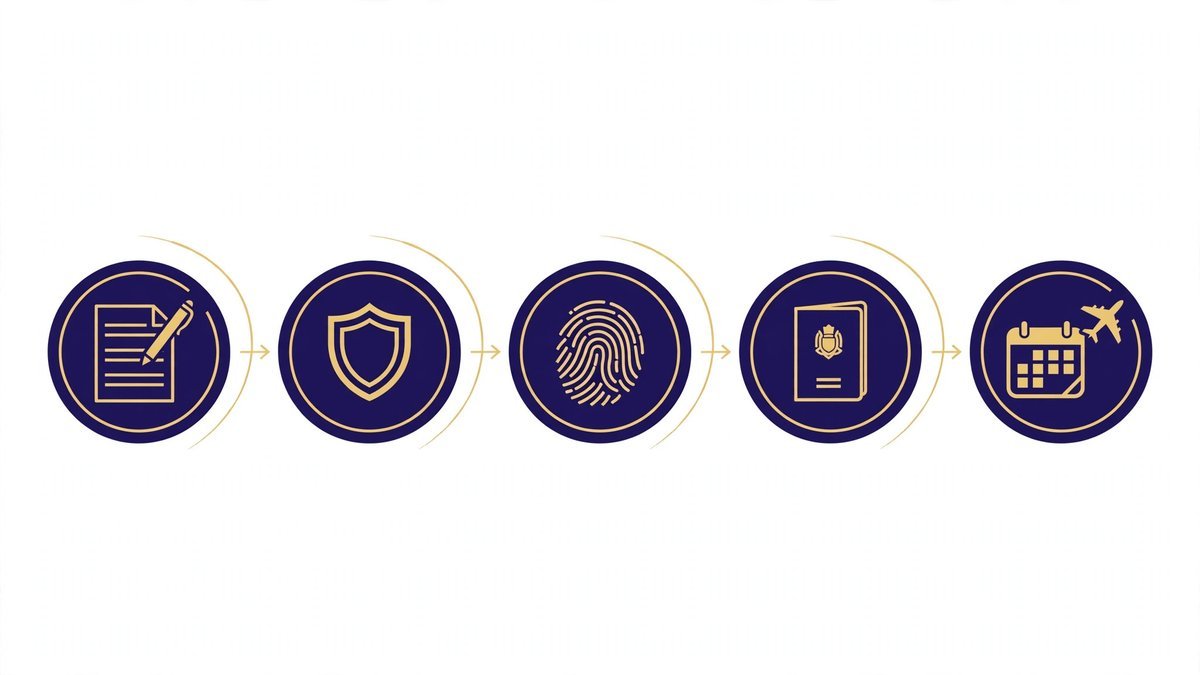
How to Apply for a Schengen Visa From Pakistan: Step by Step
Step 1: Identify your main destination
Apply the main-destination rule above. Your whole application goes to one country: the one where you will spend the most days.
Step 2: Check that country’s Pakistan channel
Use the per-country routes above (or the destination’s official Pakistan page) to find where you lodge: embassy direct, VFS Global or BLS.
Step 3: Complete the application form
Fill in the destination state’s form accurately. Every entry must match your supporting documents.
Step 4: Gather documents and insurance
Assemble the file from the documents table and arrange compliant EUR 30,000 travel medical insurance.
Step 5: Book the appointment
Book through the official channel only: the German waiting list, the French embassy appointment system, BLS or VFS as applicable. Never buy appointments from agents.
Step 6: Pay the fees
Pay the EUR 90/45 visa fee plus the centre’s service fee at the appointment, per the channel’s instructions.
Step 7: Attend and give biometrics
Fingerprints and a photograph are captured at the appointment (first-time applicants). Then wait for the decision; the passport is returned through the channel you applied with.

EES: The New Entry/Exit System at the Border
Since 10 April 2026, the EU’s Entry/Exit System (EES) has been fully operational at all external Schengen borders. For Pakistani visitors this means:
- At your first entry, your fingerprints, facial image and travel-document data are registered electronically. There is no fee and no pre-application; it happens at the border.
- Passport stamps have been replaced by this digital record.
- Your biometrics are reused for about three years on subsequent trips.
- The planned ETIAS authorisation is a different system, is not operating, and in any case applies only to visa-exempt travellers, not to Pakistani visa holders.
A Schengen visa in your passport remains mandatory; EES is a border procedure, not a substitute for the visa.
Processing Time: How Long Does It Take?
Lodge your application no earlier than 6 months before travel (9 months for seafarers) and no later than 15 days before your intended journey. The consulate normally decides within 15 calendar days of an admissible application; in individual cases requiring closer examination, this can extend to 45 days. Apply at least 6 to 8 weeks before travel to be safe, and longer in peak summer season.
Common Reasons Schengen Visas Are Refused in Pakistan
No official list of refusal reasons is published; the patterns below come from immigration advisers and industry analyses of actual refusal letters:
- Incomplete or inconsistent documents, or contradictions between the form and the file.
- Insufficient financial means, including sudden unexplained large deposits.
- Weak accommodation or itinerary proof.
- Weak ties to Pakistan, read as overstay risk.
- Unclear purpose of travel.
- Previous visa violations, overstays or fraud.
- Wrong-embassy applications (“embassy shopping”) instead of the main-destination state.
Context matters: industry analyses of European Commission statistics put Pakistan’s Schengen refusal rate at about 46% for 2025, against a global average near 15%. The file of a Pakistani applicant is therefore examined strictly; a complete, consistent, well-funded application is the only answer.
Visa Validity: Single vs Multiple Entry
A Schengen visa may be issued for single or multiple entries. Multiple-entry visas can carry validity of up to five years, but the 90-days-in-any-180-day-period cap still applies to your combined stays. And an important nuance: a visa does not guarantee entry. Border guards apply the Schengen Borders Code on arrival, and entry can still be refused if the entry conditions (valid documents, justified purpose, sufficient funds, no alerts) are not met.
Practical Tips for Pakistani Applicants
- Pick the right embassy first. The main-destination rule is not optional; applying to the “easiest” embassy is a refusal risk.
- Apply early. Six to eight weeks before travel is the sensible minimum.
- Keep bank activity clean. Stable, explainable finances over six months beat a sudden large balance.
- Book refundable travel. Never pay for non-refundable flights or hotels before the visa is granted.
- Insure correctly. The EUR 30,000 certificate must name you, cover all Schengen states and span your exact dates.
- Never buy appointments. Germany’s waiting list is free; Italy’s embassy warns explicitly against appointment fraud.
- Keep copies of everything you submit.
Frequently Asked Questions
How much is the Schengen visa fee from Pakistan in 2026?
EUR 90 for applicants aged 12 and over, EUR 45 for children aged 6 to under 12, and free for children under 6. An application-centre service fee applies on top (for example, 7,718 PKR for Netherlands applications via VFS Global). Fees are non-refundable.
How long does a Schengen visa take to process in Pakistan?
Consulates normally decide within 15 calendar days, extendable to 45 in individual cases. Lodge no earlier than 6 months and no later than 15 days before travel.
Where do Pakistanis apply for a German Schengen visa?
Through the free online waiting list of the German Embassy in Islamabad or the Consulate General in Karachi; appointments are allocated chronologically and no agent is needed.
Where do Pakistanis apply for a French Schengen visa?
Directly at the French Embassy in Islamabad, by appointment only. France has no outsourced visa application centre in Pakistan.
Is travel insurance mandatory for a Schengen visa?
Yes. Minimum EUR 30,000 cover for medical emergencies, hospitalisation, repatriation and death, valid in all Schengen states for the entire stay.
What is the EES and does it replace the visa?
The Entry/Exit System digitally registers third-country nationals at Schengen borders since 10 April 2026 (fingerprints and facial image at first entry). It replaces passport stamps but does not replace the visa.
Can I visit multiple countries on one Schengen visa?
Yes, up to 90 days in any 180-day period across all 29 Schengen states combined. Apply to the country of your main destination.
What happens if my Schengen visa is refused?
The fee is not refunded. The refusal notice states the legal grounds, and you may reapply once you can address them, or appeal under the refusing state’s national law.
Official Sources
All rules, fees and procedures in this article were checked against the following official sources on 11 October 2026:
- Travel documents for non-EU nationals (europa.eu)
- Entry/Exit System fully operational since 10 April 2026 (European Commission)
- Adjustment of the fee for a Schengen visa (German Federal Foreign Office)
- Visa: short-term stay / Schengen (German Embassy Pakistan)
- Increase in Schengen visa fees from 11 June 2024 (Italian Embassy Islamabad)
- How to book an Italian visa appointment (Italian Embassy Islamabad)
- France-Visas: Pakistan submission page
- Netherlands visa application in Pakistan (VFS Global)
- Applying for a Schengen visa (Estonian Ministry of Foreign Affairs)
Disclaimer
TourPointGo is an independent information website and is not affiliated with the European Union, any Schengen member state, VFS Global, BLS International or any embassy. Visa rules, fees and procedures change over time; always confirm current requirements on the official pages linked above, especially the Pakistan page of your main destination state, before applying. This article provides general information only and is not legal or immigration advice.








6 thoughts on “Schengen Visit Visa From Pakistan 2026: Requirements, Fees and How to Apply”